Showing posts with label prescription drugs. Show all posts

Thursday, September 12, 2013

New Mexico Drug Problem Could Use Arizona Solutions

National statistics have been confirming what many New Mexicans know anecdotally-- the drug problem is bad, the death rate is horrific, and too many children are suffering the consequences.
Consider:
  • 60 % more drug overdoses in New Mexico than 10 years ago
  • Sales of prescription painkillers rose 131% during the same period
  • Heroin has been a growing problem among prescription opioid users
  • Since 2007, New Mexico has ranked in the top ten nationally for illicit drug dependence
  • 9% of the population reports using drugs, compared to 8% nationally
  • Drug-related deaths in New Mexico occur at double the national rate 
  • Drug-related deaths in New Mexico lead vehicle accidents and firearm deaths as causes of premature death, accounting for nearly 1 out of ten premature death
  • Half the local prison population has been convicted of drug-related crime
If one out of ten adults is using illicit drugs, then how many children are at risk for neglect, exposure, ingestion, abuse, delinquency or drug-related criminal activity and violence? Just last week, two men were caught smoking meth around three children, aged 14, 8 and 5 months. Along with drug possession, they were charge with contributing to the delinquency of a minor—but significantly, not child abuse or child endangerment.

What happened to those children? Who knows? In states with a strong drug endangered children coalition, the arresting officers would coordinate with child protective services, medical professionals, mental health professionals and courts to assess the risk to the children and reduce it accordingly. Despite a host of substance abuse programs in New Mexico (which the federal government funds at about $63 million annually), no one group is taking the lead on addressing the problems the children who are getting caught up in the adult epidemic.

A look at neighboring Arizona might suggest a model for collaboration. The Arizona Alliance for Drug Endangered Children works with tribes, cities, counties, schools and professionals to educate the public about the risks that children face around drug users. AZ DEC alliance members developed protocols to outline the roles and responsibilities of professionals intervening in the case of drug endangered children. In seven years, the Arizona DEC Program resulted in the successful prosecution of over 138  cases involving over 291 children. A special agreement between the state and tribal governments allows tribal officers broader jurisdiction, and more flexibility in pursuing cases across the reservation border. More local collaborative efforts target specific problems, like prescription drug abuse, by involving the entire community in anti-drug causes.

To learn more about how to form collaborative teams that can help children whose caregivers are using drugs, join us in Phoenix for a free two-day training session, October 2-3.


Thursday, July 25, 2013

Tribal Drug Smugglers Face Exile

Canadian drug smuggling poses a problem for many tribes in Washington, Idaho and Montana. Mexican drug trafficking organizations orchestrate some of the smuggling, aided by Native gang members, many younger than 12. Planes full of marijuana touch town in isolated areas of Washington's Colville Reservation and Montana's Fort Peck Reservation, then take off again before tribal police can even approach the scene. The potent BC bud also finds its way across the border into the Blackfeet tribal lands.

Even more dangerous than planeloads of pot has been easy access to prescription drugs in Vancouver. Seattle area tribes are in a position to distribute potent painkillers like OxyContin all down the west coast. The 4000-member Lummi tribe has seen 33 tribal members convicted for drug smuggling.

Eugenia Phair, a Lummi member, was smuggling 1200 pills a day across the border by using her girlfriends in the tribe as mules, then making most of her deals in the tribe's busy casino. After a customer's toddler died from eating a pill off the floor, the tribal community decided to take action and vowed to banish dealers from the tribe. Now out of prison, she can no longer work for the tribe, live on tribal lands, or get assistance or housing.

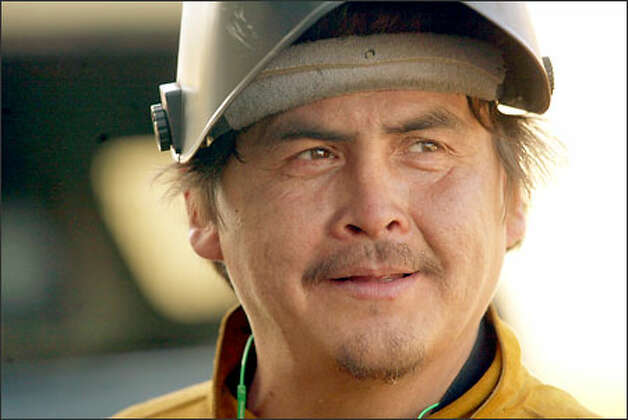
John Jefferson (pictured, above) also learned the hard way about the Lummi's zero tolerance policies. When he couldn't make a living as a traditional fisherman, he turned to dealing drugs to support his growing drinking and drug habit. He returned from federal prison to learn he's no longer welcome among his tribe. Jefferson told a reporter that being banished was like losing his soul. "The worst thing that would ever happen to me in my life was to be banished from the rez, and not to have my fishing rights, or to be able to get my health benefits, or not live on the reservation."

In their determination to cleanse their community, Lummi tribal elders even burned one drug house, abandoned when its tenant went to prison. Recently, the Makah have tried this approach with a non-tribal member, a sex offender who was dealing oxycodone and also engaging in burglary and violent crimes.

Does banishment make a difference? The debate is raging, even among the Lummi and Makah. Supporters say that the people who got banished were spreading harm, and even some of the offenders admit the widespread destruction they caused among their friends and relatives. "My victims are the children whose parents were using the drugs I sold," admitted Phair. "I have more victims than anybody."

Monday, May 6, 2013

Pill Mills Moving from Florida to Georgia


At the beginning of 2012, prescriptions written at "pain centers" or "pain management clinics" were responsible for at least 7 Floridians dying every day. Thanks to a combination of actions taken by legislators and law enforcement statewide, the number of overdose deaths is finally declining and indicators show that the Florida doctors are practicing medicine, particularly pain management, responsibly.

Meanwhile, in Georgia  the number of mills has surged more than tenfold since the crackdown in Florida and other southern states. The DEA is investigating anyone who moved from Florida to Georgia and opened a pain clinic, but new ones keep poppingup. The legislature might want to take note of Florida's success, and copy some of their tactics, including:

  • Entering data in and querying the Prescription Drug Monitoring Program Database
  • Passing laws against doctors selling oxycodone, opening "pain clinics"
  • Passing laws against drug distributors and pharmacies that sell high volumes of controlled substances
  • Committing sufficient resources to prosecute over-prescribing doctors and individuals involved in the prescription pill trade
The last part is critical. The legislature has passed a PDMP law, but the system is not yet up and running. Lawmakers are considering legislation to require stricter licensing for pain clinics, but it's not clear how this program would be managed. 

Saturday, April 6, 2013

Killing the Pain Is Killing People

As prescription painkillers become harder to obtain, more expensive and less likely to get you high, opiate addicts in many areas are finding that it's cheaper to satisfy their jones with cheap Mexican heroin. Even though prescription drug-related deaths are have outstripped auto accidents in some areas, heroin is even more dangerous, cut as it is with a variety of chemicals, and of unpredictable potency.

While some areas, like Idaho and Montana, are still wrestling more with methamphetamine abuse (and have passed strict laws to control over-the-counter drugs like pseudoephedrine), more urban regions (like Minnesota, New York, Washington and Florida) are definitely seeing an increase in heroin related deaths and prescription overdoses.

Native Americans experience an overdose rate triple that of the general population, but even suburban parents of promising athletes have been seeing sports injuries tragically turn to opiate addiction, then death by overdose.

We've been sounding this alarm for a while now, but 2013 is the year that we're taking action. Sign up for our tribal drugs of abuse and drug endangered children training program to talk about how this deadly trend is impacting public health, public budgets and public safety in Indian Country. At our regional sessions and our May 1 webinar on the prescription drug to heroin link, we'll provide an overview of the problem and then get to work discussing solutions that will work with the resources we have in our communities. 

Wednesday, February 20, 2013

Prescription Overdoses Continue to Rise For 11th Year

Federal data compiled by the Center for Disease Control and Prevention show that prescription drug deaths rose for the 11th year in a row, to a shocking 38,329 deaths nationwide. The report, published in the Journal of the American Medical Association, shows that opioid painkillers like Vicodin and Oxycontin are the primary culprits, accounting for 75% of overdoses. Valium contributed to about 30% of the overdoses.

About 17% of these cases were clearly suicides, but the rest seem to have been accidental. The director of the chemical dependency program at NYC's Beth Israel Medical center told AP, "Right now there's a general belief that because these are pharmaceutical drugs, they're safer than street drugs like heroin. But at some point, people using these drugs are going to become more aware of the dangers."

In response to this growing problem, Indian Country Training is continuing its Tribal Prescription Drug Abuse Program, combined with Drug Endangered Children education, for another year. Intensive two-day regional sessions are scheduled for Albuquerque, Nashville, Spokane and Phoenix. For those who can't travel, or want some additional information, webinars are scheduled for May, July, September and November. Contact Indian Country Training for more information on these tuition-free events.

Thursday, January 17, 2013

CDC Working to Prevent Painkiller Overdoses

In response to the skyrocketing deaths from prescription painkiller overdoses, the CDC put together a handy guide on what they're doing to prevent it, called "Saving Lives and Protecting People: Preventing Prescription Painkiller Overdoses." It's also available for download as a pdf.

The cost of not taking these critical steps is clear:

Overdoses of prescription painkillers (also called opioid or narcotic pain relievers) have more than tripled in the past 20 years, killing more than 15,500 people in the United States in 2009.
Overdose deaths are only part of the problem—for each death involving prescription painkillers, hundreds of people abuse or misuse these drugs:
  • Emergency department visits for prescription painkiller abuse or misuse have doubled in the past 5 years to nearly half a million. 
  • About 12 million American teens and adults reported using prescription painkillers to get “high” or for other nonmedical reasons.
  • Nonmedical use of prescription painkillers costs more than $72.5 billion each year in direct health care costs.

Friday, December 7, 2012

Battling Heroin in Minnesota Requires Community Coalitions

Read the whole story at Indian Country Today Media Network. The news from Minnesota tribes may be grim, but Walter reminds us that solutions lie in education and community coalitions that battle this problem, starting with preventing and treating prescription opiate addiction.  Besides destroying the user's life and health, heroin use results in increased crime, HIV and hepatitis infections, and drug endangered children living in filthy and dangerous environments. Tribes are working with county, state and federal officials to turn this around, but all concerned community members, from caregivers to teachers and from health care workers to law enforcement officers and Tribal courts need to help with the effort to combat heroin.

Thursday, October 4, 2012

Rx Drug Take Back Day A Huge Success

Americans turned in 488,395 pounds—244 tons—of prescription and over the counter drugs on Saturday to DEA agents nationwide. Removing these prescription medications from circulation cuts down on the potential for abuse and its catastrophic consequences.  All together, the Take Back events have collected over 1018 tons of prescription pills. We're making progress!

Do you have a Rx Drug Abuse Prevention success story?
Head over to our Facebook page and join the discussion!

Tuesday, September 25, 2012

Prescription Drug Take-Back Day Saturday, September 29

Coming To A Site Near You

The best way not to become a party to prescription drug abuse is to avoid having drugs in the house that are unused or expired. Prescription and over the counter drugs should never be flushed or put down the drain, to avoid contaminating the water supply. Instead, they must be disposed of in an environmentally safe manner.

To make disposing of unused drugs easier, the DEA will be accepting any pills or liquids you have lying around your house, between 10 am and 2 pm on Monday, September 29. To find the nearest collection site, go to the DEA website to search by your zip code. You can also call 1-800-882-9539 for more information about the program.